
Introduction
The year 2026 presents a wealth of scholarship opportunities for students across the globe. From fully funded government programs to university-based grants, thousands of scholarships are now open for undergraduate, master’s, PhD, and research studies.
And these opportunities are open and available across continents and countries.
However, with over 10,000+ scholarships available worldwide, students have a unique chance to pursue academic excellence without financial barriers.
Many of these opportunities cover tuition fees, living expenses, travel costs, and health insurance, making international education more accessible than ever before.
In order to secure scholarship opportunities here are to explore the key organizations and countries offering scholarships, reasons why some countries avoid these opportunities, and what makes 2026 in particularly a special year.
Key Global Organizations and Member Countries
United Nations (UN): Comprises 193 member states.
Group of Twenty (G20): Includes 19 countries (Argentina, Australia, Brazil, Canada, China, France, Germany, India, Indonesia, Italy, Japan, Mexico, Russia, Saudi Arabia, South Africa, South Korea, Türkiye, UK, US), the African Union, and the European Union.
Group of Seven (G7): Canada, France, Germany, Italy, Japan, UK, USA.
World Trade Organization (WTO): 164 members representing over 98% of international trade.
NATO (North Atlantic Treaty Organization): 32 members, including USA, Canada, and various European nations.
World Health Organization (WHO): 194 Member States.
Organizations and Countries Involved:
Major international organizations and the countries involved in scholarship for the year 2026 include a vast network of intergovernmental bodies aimed at cooperation on peace, economics, and development.
Scholarship opportunities in 2026 are driven by a mix of governments, international organizations, universities, and private foundations.
1. Government-Funded Scholarships
Budget Constraints: Governments and universities have limited financial resources. They often prioritize funding for domestic students over international students, particularly if their own institutions are facing financial difficulties.
Meanwhile many countries invest heavily in attracting international students through fully funded educational programs, and some of those countries are:
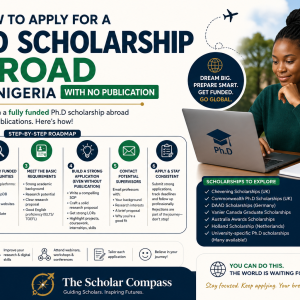
United Kingdom: There are many scholarship programmes organised and funded by the United Kingdom government. Here are some of the scholarships among others.
Chevening Scholarships
Commonwealth Scholarships
United States: Government of the United States of America is at the forefront when it concerns to scholarship Below is one of such being funded directly by the government.
Fulbright Foreign Student Program
Germany: Apart from being one of the strongest economies in Europe, Germany is also committed to giving interested students across the world the opportunity to explore academically and one of such platforms is
DAAD Scholarships
Japan: The country of Japan through her government offers well funded scholarships through.
MEXT Scholarships
China: China, the economic giant of Asia has opened her education related doors through her government owned scholarship scheme.
Chinese Government Scholarships
These programs typically cover full expenses and aim to build global leadership and international collaborations.
2. International Organizations & Foundations
World Bank (JJ/WBGSP Program) – Supports development-focused studies
Erasmus Mundus (European Union) – Offers joint degrees across multiple countries
Aga Khan Foundation – Supports postgraduate education globally
These organizations focus on development, innovation, and global impact, especially for students from developing countries.
3. Universities and Research Institutions
Top universities in countries like the UK, USA, Australia, and Canada offer:
Merit-based scholarships
Need-based financial aid
Research grants and assistantships
For example, institutions like Stanford, Yale, and University of Melbourne provide generous funding packages for international students.
Why Do Some Countries Avoid Such Opportunities?
While many countries and universities heavily promote scholarship opportunities to attract international talent, some countries or institutions may restrict, reduce, or avoid offering generous scholarship opportunities.
Despite the abundance of scholarships, some countries or students do not fully participate for several strategic, economic, and logistical reasons:
1. Lack of Awareness
Many students simply do not know these opportunities exist or how to apply thereby missing out in the enormous opportunities.
2. Complex Application Processes
Scholarships often require:
English proficiency tests (IELTS/TOEFL)
Recommendation letters
Personal statements
And these requirements can discourage applicants from seizing the opportunities it presents.
3. Misalignment with National Priorities
Scholarships are often designed to meet specific country needs, such as:
Skill shortages
Research priorities
Diplomatic goals
Applicants who do not align with these priorities may be rejected.
4. Fear of Brain Drain
Some governments worry that students who study abroad may not return home, leading to loss of talent.
5. Financial and Social Barriers
Even with full funding, students may face:
Visa challenges
Cultural differences
Family responsibilities
Weather change
Major New & Recurring Global Schemes
Several prestigious international programs have launched massive 2026 intakes, often covering 100% of tuition, flights, and living costs:
GREAT Scholarships 2026: A collaboration between the British Council and 71 UK universities, offering £10,000 awards to students from over 15 countries.
PTDF Overseas Scholarship 2026: The Petroleum Technology Development Fund has opened applications for MSc and PhD programs in the UK, Germany, France, and Malaysia, specifically targeting energy and petroleum needs.
Australia Awards 2026: These prestigious government-backed awards are currently accepting applications for full-time study in Australia, focusing on students from developing nations.
Why 2026 Is Special for Scholarship Opportunities
The year 2026 is emerging as a unique window for scholarship seekers due to a surge in fully-funded global initiatives, new industry-specific digital funds, and a major push for STEM and energy sustainability training.
Whether you are looking for undergraduate or postgraduate support, several key factors make the 2026 academic cycle particularly noteworthy. Examples Are:
1. Increased Global Funding
Countries are investing more in education to address:
Climate change
Digital transformation
Global health
New programs in AI, sustainability, and cybersecurity are being introduced and many students are cashing into these fast-growing fields.
2. Post-Pandemic Academic Expansion
Universities worldwide are expanding international admissions after years of disruption by creating more scholarship slots.
3. Early Application Windows
Many major scholarships now open early in the year (January–February 2026), giving prepared students an advantage.
4. Focus on Diversity and Inclusion
Scholarship providers are prioritizing:
Students from developing countries like Africa, Asia and others.
Underrepresented communities
Women in STEM
This makes 2026 more inclusive than previous years.
5. Wide Range of Opportunities
In 2026 alone, dozens of global opportunities—from PhD programs to leadership fellowships—are already open, covering diverse fields and regions.
Conclusion
Scholarship opportunities in 2026 are more abundant, diverse, and accessible than ever before. With strong support from governments, international organizations, and universities, students worldwide—especially from developing countries—have a unique chance to study abroad and transform their futures.
However, success depends on awareness, preparation, and strategic application. By understanding how scholarships work and aligning with country priorities, students can significantly improve their chances.