
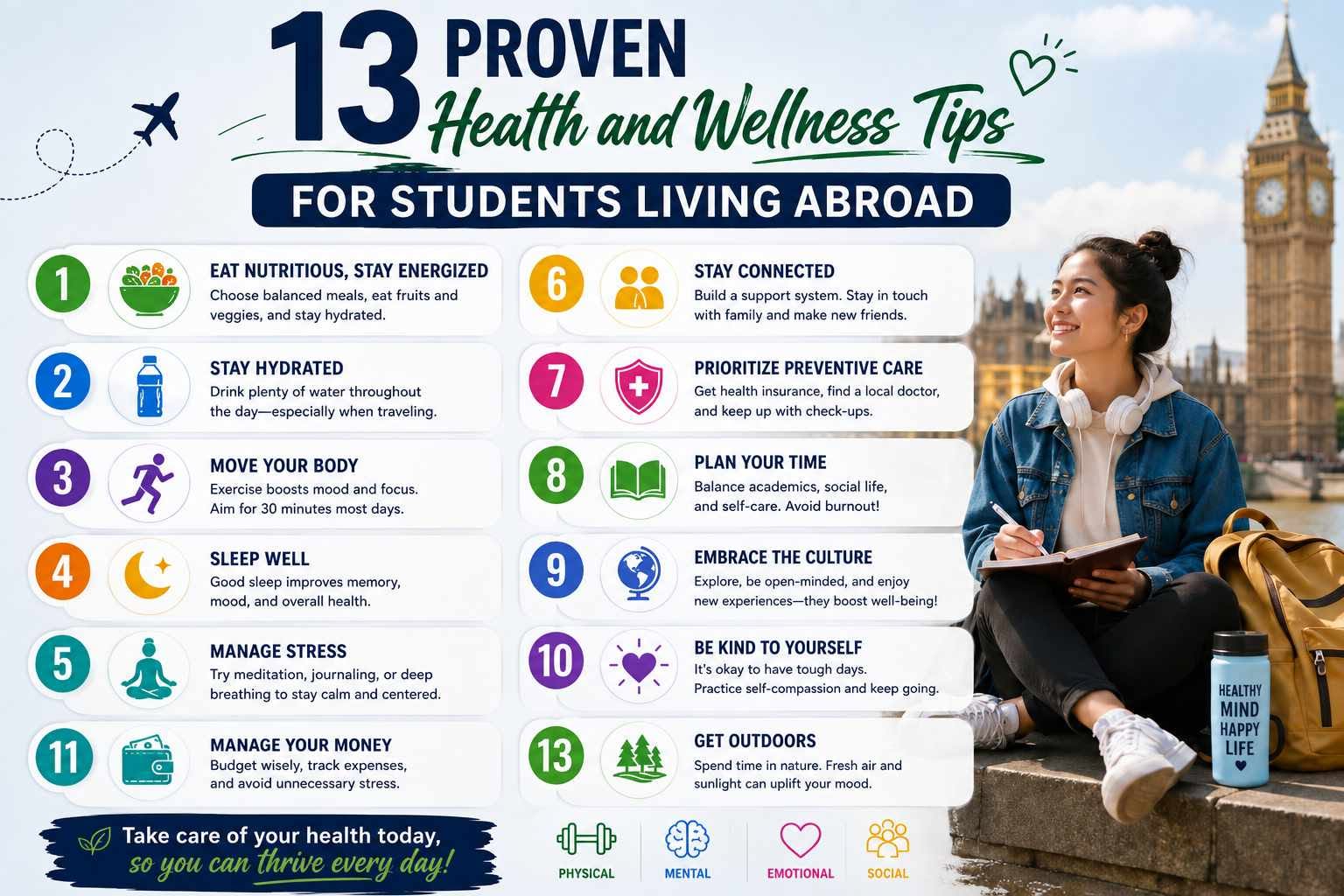
13 Plus Proven Health And Wellness Tips For Students Living Abroad
Introduction
Studying abroad is one of the most exciting and life-changing experiences a student can have. It offers the opportunity to explore new cultures, gain global exposure, and build independence. However, living in a foreign country also comes with unique challenges especially when it comes to maintaining your health and wellness.
From adjusting to new food and climates to managing stress and homesickness, students abroad must be intentional about their well-being. In this guide, you’ll discover 13 proven health and wellness tips for students living abroad that will help you stay physically, mentally, and emotionally balanced throughout your journey. Here is a short story from Ken;
The Day I Realized “Fine” Wasn’t a Health Status
I used to answer “how are you settling in?” with “I’m fine” so automatically that I stopped noticing it wasn’t true. Fine was code for: I’m eating, I’m attending class, I haven’t cried in a library this week. It took a random blood pressure check at a campus health fair, the kind of event I almost skipped because I “didn’t have time” for a nurse to quietly ask if I’d been stressed lately. I laughed. Then I actually thought about it. I hadn’t slept past five broken hours in weeks. I drank coffee like it was hydration. I’d started treating exhaustion as a personality trait instead of a warning sign.
That five-minute conversation did more for me than any wellness article I’d skimmed and closed. Not because she told me anything dramatic, but because she asked the one question I’d stopped asking myself: not “are you managing,” but “are you actually okay, physically, right now.” Abroad, it’s easy to conflate coping with wellness. You can be coping showing up, passing, surviving while your body quietly runs a deficit that nobody, including you, is tracking.
What changed after that wasn’t a total life overhaul. It was smaller and less impressive than that: a sleep cutoff time I mostly kept, a water bottle I actually refilled, and giving myself permission to say “I’m struggling” instead of “I’m fine” when someone actually asked. Wellness stopped being a to-do list and started being a form of honesty.
13 Proven Tips
1. Maintain a Balanced Diet
One of the biggest changes students face abroad is food. It’s tempting to rely on fast food or processed meals, especially when you’re busy or unfamiliar with local ingredients. However, your body needs proper nutrition to function optimally.
Focus on eating a balanced diet that includes:
Fresh fruits and vegetables
Whole grains
Lean proteins
Healthy fats
Try exploring local markets where you can find affordable, fresh produce. Cooking your own meals not only saves money but also ensures you’re eating healthier.
Pro Tip: Learn a few simple recipes before traveling so you’re not overwhelmed when you arrive.
2. Practice Good Hygiene Habits
Paying attention to personal hygiene while adapting to a new environment is a necessity. Practicing good hygiene is crucial to staying healthy while studying abroad.
Wash your hands regularly, especially before meals. Keep your living space clean, and ensure your food is properly prepared. If you’re living in shared accommodation, be mindful of cleanliness in common areas to prevent infections.
Consider these tips:
Wash hands frequently with soap and water
Shower or bath regularly to remove bacteria, dead skin cells, and oils.
Brush teeth at least twice a day
Keep fingernails and toenails trimmed and clean
Wash your face and hair regularly
Change into clean clothes every day and wash used clothes regularly
3. Stay Hydrated Daily
Hydration is often overlooked, but it plays a crucial role in maintaining energy levels, concentration, and overall health. Changes in climate especially moving to colder or hotter countries can affect how much water your body needs.
Aim to drink at least 6–8 glasses of water daily. If you’re in a colder country, you may not feel thirsty often, but your body still needs hydration.
Quick Tip: Carry a reusable water bottle to stay consistent throughout the day.
4. Build a Consistent Exercise Routine
Regular physical activity is essential for both physical and mental well-being. While it might be tempting to skip workouts due to academic pressure, staying active helps reduce stress and improve mood.
You don’t need a gym membership to stay fit.
Consider:
Walking or cycling to class
Home workouts
Joining campus sports clubs
Practicing yoga or stretching
Even 20–30 minutes of daily activity can make a significant difference.
5. Prioritize Mental Health
Living abroad can sometimes feel isolating. Being away from family and familiar environments may lead to stress, anxiety, or even depression.
To maintain good mental health:
Stay connected with loved ones
Practice mindfulness or meditation
Seek support from campus counsellors
Talk openly about your feelings
Remember, asking for help is a sign of strength not weakness.
6. Build a Consistent Sleep Routine
One of the most overlooked aspects of student health abroad is sleep. Between adjusting to a new time zone, academic pressure, and social activities, your sleep schedule can quickly become irregular. Sleep is often sacrificed by students trying to balance academics, social life, and part-time jobs. However, maintaining a consistent sleep routine is essential for both mental and physical well-being.
Try to go to bed and wake up at the same time daily, even on weekends. Limit screen time before bed and create a relaxing nighttime routine to improve sleep quality. Good sleep boosts concentration, strengthens immunity, and enhances overall productivity.
On the other hand, poor sleep can negatively impact your concentration, immune system, and mood.
Aim for 7–9 hours of quality sleep each night. Create a sleep-friendly routine by:
Avoiding screens before bedtime
Keeping a consistent sleep schedule
Creating a comfortable sleeping environment
Good sleep is one of the most powerful tools for maintaining overall wellness.
7. Manage Stress Effectively
Studying abroad comes with unique challenges like academic pressure, cultural adjustments, and financial responsibilities and adapting to a new culture can all contribute to stress. Learning how to manage stress effectively is essential for long-term well-being.
Even simple hobbies like listening to music or reading can help you unwind. If stress becomes overwhelming, don’t hesitate to seek support from campus counselling services.
Therefore, incorporate stress-relief activities into your daily routine such as:
Time management and planning
Deep breathing exercises
Journaling
Meditation
Taking regular breaks
Break tasks into smaller, manageable steps to avoid feeling overwhelmed.
8. Get Regular Health Checkups
Many students neglect routine health checkups while abroad, often due to cost concerns or unfamiliar healthcare systems. However, regular checkups are important for early detection and prevention of illnesses.
Familiarize yourself with your health insurance coverage and locate nearby clinics or student health centres. Don’t ignore symptoms because seeking timely medical advice can save you from more serious health issues later.
9. Stay Socially Connected
Building a support system abroad is crucial. Loneliness can affect your emotional health, so it’s important to stay socially active.
Ways to stay connected:
Join student organizations or clubs
Attend campus events
Make friends with classmates
Engage in cultural exchange activities
Building relationships not only improves your well-being but also enriches your overall study abroad experience.
10. Take Preventive Health Measures
Healthcare systems vary from country to country, so it’s important to understand how to access medical services in your host country.
Key preventive steps include:
Getting health insurance
Knowing the location of nearby hospitals or clinics
Keeping emergency contacts handy
Staying up to date with vaccinations
Also, maintain basic hygiene practices such as washing hands regularly and keeping your living space clean.
11. Balance Studies and Personal Life
While academic success is important, overworking yourself can lead to burnout. Striking a balance between studies and personal life is essential.
Make time for:
Hobbies and interests
Exploring your new environment
Relaxation and self-care
A well-balanced life improves productivity and keeps you motivated.
12. Stay Connected with Family and Friends
While living abroad can sometimes feel isolating, especially during the early stages, but staying emotionally connected with loved ones back home plays a key role in maintaining mental health.
Schedule regular video calls, share updates, and don’t hesitate to talk about how you feel. At the same time, make an effort to build new friendships in your host country especially among those from same cultural background.
13. Embrace Cultural Adaptation Gradually
Adjusting to a new culture can be overwhelming, but it’s also one of the most rewarding aspects of studying abroad. Instead of resisting change, embrace it gradually.
Meanwhile, joining student communities, clubs, or social groups can help you create a strong support system.
Tips for cultural adaptation:
Learn basic phrases of the local language
Respect cultural norms and traditions
Be open-minded and curious
Avoid comparing everything to your home country
The more you immerse yourself, the easier it becomes to feel at home.
FAQ: The Questions Most Wellness Lists Skip
Can jet lag from long-haul travel have effects that outlast the obvious tiredness?
Yes — beyond the first week of grogginess, disrupted circadian rhythm from long-haul travel can affect appetite regulation, mood stability, and concentration for several weeks, which students often misattribute purely to “adjusting” rather than a specific, temporary biological cause.
Do students often normalize insomnia abroad instead of treating it as a health issue?
Very commonly — new noise levels, unfamiliar mattress firmness, time-zone-shifted body clocks, and anxiety all disrupt sleep, but students frequently frame chronic poor sleep as an unavoidable part of “the adjustment” rather than something actively worth addressing.
Is there a hidden health cost to constantly translating or code-switching mentally?
Cognitive load from operating in a second language or unfamiliar social code all day is real and measurable as fatigue — it’s a form of mental exertion separate from academic workload, and it’s rarely counted when students assess how “tired” they should reasonably feel.
Do international students underuse free or subsidized healthcare simply out of unfamiliarity with the system?
Yes — many students are entitled to free or low-cost GP visits, mental health services, or dental checks through their university or national health system but never use them, not from cost avoidance but from simply not knowing how the referral or booking process works.
Can changes in gut health from new diets abroad affect mood, not just digestion?
There’s a genuine gut-brain connection — dietary shifts (different staple foods, less familiar produce, more processed convenience food) can influence mood and energy through digestive changes, which is an angle almost never mentioned outside of specialist health content.
Does isolation from a familiar community affect health-seeking behavior specifically?
Students without an established peer or family network nearby often delay seeking care for symptoms they would have acted on immediately at home, partly because there’s no one nearby to notice, ask, or nudge them toward a doctor.
Are there specific health risks tied to part-time student jobs common among international students?
Repetitive, physically demanding, or oddly-scheduled part-time work (late shifts, standing roles, kitchen jobs) common among international students on visa work-hour limits can compound sleep disruption and physical strain in ways rarely addressed in general “student wellness” content aimed at local students with different work patterns.
Is climate adjustment itself something that requires a deliberate health strategy?
Moving between very different climates (humidity levels, altitude, sunlight hours, allergens) can trigger skin issues, respiratory sensitivity, or fatigue that has nothing to do with lifestyle choices and everything to do with physical acclimatization, which typically takes weeks, not days.
Can financial anxiety show up as physical tension rather than obvious stress?
Yes — chronic low-grade money stress often manifests as jaw clenching, headaches, or muscle tension rather than a clearly identifiable “worry,” which means students sometimes treat the physical symptom (with painkillers, for instance) without recognizing or addressing its financial root.
Final Thoughts
Living and studying abroad is an incredible and exciting journey filled with opportunities for growth, learning, and cultural exploration. Meanwhile, your experience largely depends on how well you take care of your health and wellness.
However, “Managing” and “healthy” are not the same thing, and abroad is far from the people who’d normally notice you slipping the gap between the two can grow for months before anyone, including you, catches it. The most protective habit isn’t a supplement or a gym routine; it’s regularly and honestly checking in with yourself instead of defaulting to “I’m fine.”
Therefore, by following these 13 proven health and wellness tips for students living abroad, you can build a strong foundation for both academic success and personal well-being. From eating nutritious meals and staying active to managing stress and building meaningful connections, every small step contributes to your overall well-being. Remember, your well-being should always be a priority. Prioritize it, nurture it, and make conscious choices that support both your mind and body.
A healthy body and mind will not only help you thrive academically but also allow you to fully enjoy the adventure of studying abroad.