
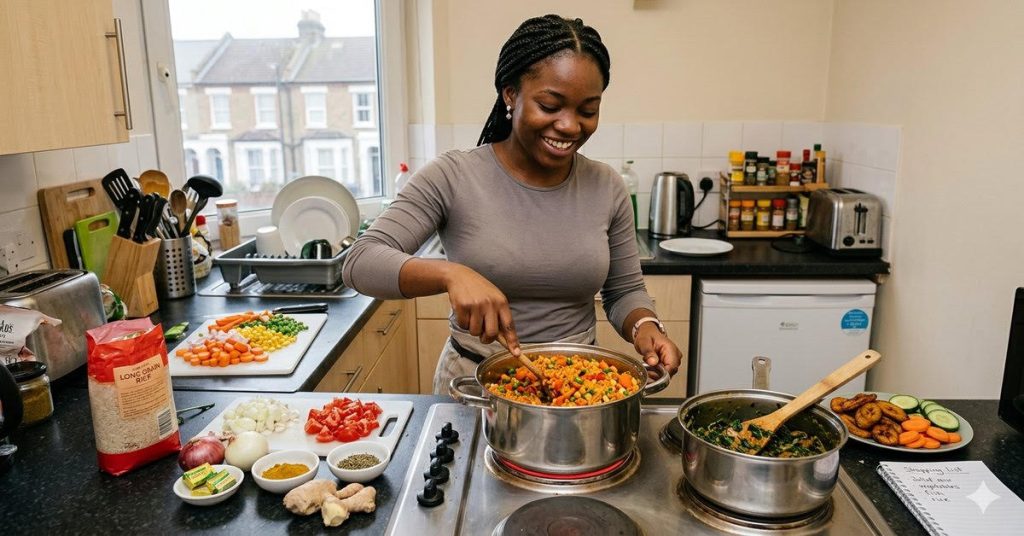
Let’s be real, studying abroad is one of the most exciting chapters of a young Nigerian’s life but within days of arriving, that familiar craving for Nigerian food kicks in. The jollof rice. The egusi soup. The puff puff. The pepper soup. No amount of pasta or supermarket ready meals quite fills that gap in your chest and your stomach.
The great news? You do not have to choose between eating well, eating Nigerian, and staying within a tight student budget. With the right knowledge of ingredient substitutions, budget shopping strategies, and simple recipes, you can cook healthy, authentic Nigerian food almost anywhere in the world from a student flat in Manchester to a shared house in Texas.
This guide covers the best healthy Nigerian meals for students abroad, where to source affordable ingredients, smart cooking tips, and how to eat well without spending your whole loan or allowance on food.
Why Nigerian Food Is Actually Perfect for Student Budgets
Before we dive into recipes, let us reframe something. Nigerian cuisine is, at its core, a budget cook’s dream. Historically built around legumes, grains, leafy vegetables, and small quantities of protein stretched across rich, flavourful soups and stews, Nigerian food is naturally:
High in fibre and nutrients — beans, leafy greens, and wholegrains dominate
Filling and calorie-efficient — a pot of egusi or beans feeds many for days
Batch-cook friendly — most Nigerian soups and stews freeze beautifully
Spice-forward, not ingredient-heavy — flavour comes from seasoning, not expensive cuts
The challenge abroad is mostly logistical: knowing where to find ingredients and how to substitute what you cannot find. Once you crack that, your kitchen becomes your greatest weapon against both homesickness and overspending.
Where to Buy Nigerian and African Ingredients Abroad
One of the biggest misconceptions Nigerian students have is that cooking Nigerian food abroad is expensive. It does not have to be.
African and Caribbean grocery shops stock the majority of what you need like palm oil, ground crayfish, stockfish, ugwu (fluted pumpkin), Maggi cubes, blended pepper mixes, dried iru (locust beans), and more. These shops exist in virtually every major city in the UK, US, Canada, Ireland, and across Europe.
Asian supermarkets are a goldmine for budget substitutes: they carry dried shrimp (a crayfish substitute), long-grain rice, fresh peppers, frozen spinach, and coconut milk at a fraction of the price of mainstream supermarkets.
Mainstream supermarkets like Tesco, Walmart, ALDI, Lidl, and Carrefour carry affordable staples you can combine with your African shop purchases: onions, tomatoes, tinned tomatoes, frozen spinach, sweet potatoes, dried beans, rice, eggs, and a range of affordable proteins.
Online African grocery delivery services like Afri-Mart, YAAM, and various Etsy-based sellers ship Nigerian pantry staples across Europe and North America if you cannot find a local shop.
6 Healthy Nigerian Meals Perfect for Students Abroad
1. Beans and Plantain (Ewa Riro + Dodo)
Why it works: This is arguably the most budget-friendly, nutrient-dense meal in the Nigerian repertoire. Black-eyed peas which is available in nearly every supermarket worldwide are an excellent source of plant-based protein, iron, and folate. Paired with fried ripe plantain which is also available at most African, Caribbean, and some Asian shops and this meal is filling, cheap, and genuinely delicious.
Budget tip: Buy dried black-eyed beans rather than tinned, for instance a 1kg bag costs roughly £1.50–£2.00 and provides multiple meals. Soak overnight and boil from scratch to save significantly.
Shortcut: If you are short on time, tinned black-eyed beans cut cooking time to under 20 minutes.
Estimated cost per serving: £1.20–£1.80 in the UK / $1.50–$2.50 in the US
2. Jollof Rice
Why it works: Jollof rice is one of the most searched Nigerian recipes online, and for good reason it is a complete one-pot meal that is easy to batch cook, stores well in the fridge for up to four days, and freezes perfectly. Long-grain parboiled rice, tinned tomatoes, tomato purée, scotch bonnet or any hot chilli, onion, and a few seasoning cubes are all you need for the base.
Protein options on a budget: Add a small amount of frozen chicken thighs (often the cheapest cut), tinned sardines, boiled eggs, or fried tofu for a student-friendly protein boost.
Healthy upgrade: Swap half the white rice for brown rice or add a handful of frozen mixed vegetables to increase fibre and micronutrients.
Estimated cost per serving: £0.80–£1.50 in the UK / $1.00–$2.00 in the US
3. Egusi Soup with Frozen Spinach
Why it works: Egusi (melon seed) soup is rich in healthy fats, plant-based protein, and vitamins. Abroad, the traditional bitter leaf or pumpkin leaf can be substituted with frozen spinach, frozen kale, or fresh Swiss chard are all widely available at mainstream supermarkets.
Ground egusi is available at African grocery shops and online. Palm oil which is essential to the authentic flavour is also available in African shops or online. A 1-litre bottle goes a long way and lasts months.
Budget tip: Skip the expensive assorted meats and use dried stockfish or smoked mackerel, this is also widely available in UK supermarkets for that deep, smoky umami flavour at a fraction of the cost.
Serve with: Semolina; as labelled as semolina pudding or fine semolina in UK supermarkets, pounded yam flour also available in African shops, or even mashed sweet potato as a nutritious swallow substitute.
Estimated cost per serving: £1.50–£2.50 in the UK
4. Vegetable Soup (Edikaikong-Style) with Any Leafy Green
Why it works: Traditional edikaikong uses ugwu and waterleaf, but this soup is incredibly forgiving. In Abroad, you can recreate it beautifully using frozen spinach combined with any other leafy green like kale, collard greens, or even savoy cabbage. The key flavour elements like palm oil, crayfish or dried shrimp, onion, peppers, and seasoning are all accessible.
This soup is one of the most nutritionally complete in Nigerian cuisine packed with iron, vitamins A, C, and K, and plant-based protein when made with beans or mushrooms.
Vegan-friendly version: Skip the meat and seafood entirely, a generous helping of red kidney beans and mushrooms creates a rich, satisfying feeling that is both cheap and nourishing.
Estimated cost per serving: £1.20–£2.00 in the UK
5. Moi Moi (Steamed Bean Pudding)
Why it works: Moi moi is a protein powerhouse made from blended black-eyed beans, peppers, onions, and seasoning. It is naturally gluten-free, high in protein and fibre, and incredibly filling. You can make a large batch on a Sunday, refrigerate portions, and eat them throughout the week with rice, bread, or on their own as a snack.
Abroad adaptation: Use a blender or NutriBullet to blend the soaked beans. Instead of banana leaves or foil, use small heatproof containers or ramekins for steaming.
Add-ins: Boiled eggs, canned tuna, or sardines added to each portion increase the protein content significantly at minimal extra cost.
Estimated cost per serving: £0.70–£1.20 in the UK
6. Oatmeal Akamu (Pap-Style Porridge)
Why it works: Traditional akamu (ogi/pap) is not always easy to find abroad, but you can recreate the warming, nourishing experience using plain rolled oats blended to a fine consistency and cooked with a small amount of tamarind or lemon juice for that familiar slight tang.
This is an ideal breakfast for students because it’s quick, cheap, warming, and genuinely healthy. Serve with boiled eggs or akara (bean fritters) for a protein boost.
Health note: Oats are exceptionally high in beta-glucan, a soluble fibre proven to support heart health and stabilise blood sugar, making this a genuinely nutritious start to any study day.
Estimated cost per serving: Under £0.50 in the UK
Smart Budget Cooking Tips for Nigerian Students Abroad
Try as much as possible to batch cook every weekend. Most Nigerian soups and stews like egusi, vegetable soup, stewed beans freeze well in portions. Spend two to three hours cooking on a Sunday and you will have weekday meals sorted with zero effort.
Split costs with flatmates or Nigerian society members if you have any within. Buying a large bag of rice, a box of stockfish, or a big bottle of palm oil becomes very affordable when split between four or five people. Many Nigerian student societies abroad organise communal cooking sessions you can join yours.
Learn the price difference between dried and tinned beans. Dried black-eyed beans, kidney beans, and lentils are almost always three to four times cheaper per serving than their tinned equivalents. The trade-off is soaking and cooking time, but for batch cooking, this is entirely manageable.
Use a slow cooker or rice cooker. These affordable kitchen gadgets which is often available second-hand for under £10 are ideal for Nigerian cooking beans, soups, and stews and can be left to cook unattended while you study.
Buy frozen vegetables, not fresh. Frozen spinach, frozen mixed peppers, and frozen okra are cheaper, the last longer, and are nutritionally equivalent to fresh. They are also already chopped, saving preparation time.
Eating Nigerian Abroad Is an Act of Self-Care
Beyond nutrition and budget, there is something deeply important about maintaining your food culture while studying abroad. Cooking Nigerian food in your student flat is an act of identity, community, and mental wellbeing. The smell of frying onions and palm oil, the satisfaction of a pot of jollof rice coming together these reminds one of home.
You do not have to choose between your culture and your budget. With the right shopping strategy and a handful of basic recipes, healthy Nigerian cooking abroad is not only possible, it can become one of the most grounding rituals of your student life.
Lastly, ingredients are available and prices vary by location. Always check local African grocery stores and online delivery options for the most up-to-date sourcing.