
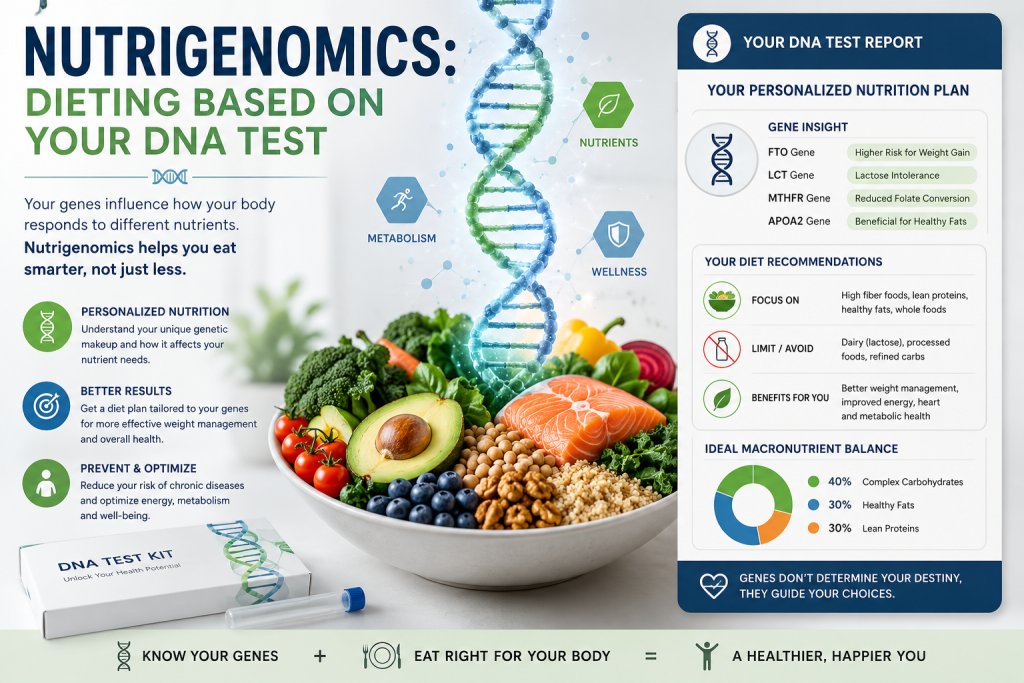
Nutrigenomics: Dieting Based on Your DNA Test
Introduction
Imagine eating in a way that is perfectly designed for your body, blood type, and genotype not based on a trending diet plan, a celebrity endorsement, or a generic calorie chart, but based on your actual genetic makeup. That is the promise of nutrigenomics, one of the most exciting frontiers in modern nutrition science.
As DNA testing gets more accessible and cheaper, more people are turning to nutrigenomics to figure out how their genes play with the food they eat. Then, they use that knowledge to make smarter, more personalized food choices. In this post, we’ll dive into what nutrigenomics actually is, how dieting based on your DNA works, what a DNA nutrition test can tell you, and whether it’s something you should consider.
So, What Exactly Is Nutrigenomics?
Nutrigenomics is basically the scientific study of the connection between your genes, what you eat, and your overall health. The name itself is a combination of “nutrition” and “genomics” in other words, it is the study of genes and how they work.
Therefore, nutrigenomics is built on a pretty powerful idea: your DNA influences how your body reacts to the foods you eat. Think about it this way, two people can eat the exact same meal, but their bodies might process it in completely different ways. One person thrives, while the other struggles. A big reason for this difference is our unique genetic makeup.
Nutrigenomics aims to explain and use these variations to our advantage. By looking at specific gene variations known as Single Nucleotide Polymorphisms, or in a short form SNPs, scientists and nutritionists can figure out things like:
* How your body breaks down carbs, fats, and proteins.
* How well you absorb vitamins and minerals.
* Your likelihood of developing food-related issues like lactose intolerance or gluten sensitivity.
* How your genes might affect your appetite, cravings, and how full you feel.
It’s closely related to but not quite the same as nutrigenetics, which focuses on how genetic variations affect how individuals respond to specific nutrients. Together, these two fields are the foundation of DNA-based personalized nutrition.
How Does Dieting Based on Your DNA Actually Work
Dieting based on your DNA, sometimes called a genetic diet plan or a personalized nutrition DNA program, starts with a simple DNA test. Usually, it’s just a quick saliva swab or cheek swab that you collect at home and send off to a lab.
Once your sample is analysed, the lab checks hundreds or even thousands of genetic markers linked to things like metabolism, nutrient absorption, food sensitivities, how your body handles inflammation, and weight management. The results are then put into a personalized nutrition report that maps out your genetic profile and gives you specific dietary recommendations.
Here’s a simple breakdown of the process:
1. Take a DNA Test: You order a kit from a nutrigenomics company, collect your saliva sample, and mail it to their lab.
2. Lab Analysis: Scientists extract your DNA and scan for gene variations that are relevant to nutrition and metabolism.
3. Receive Your Genetic Nutrition Report: This report details your genetic predispositions in areas like how sensitive you are to carbs, how you metabolize fats, how you use protein, potential vitamin deficiencies, and food intolerances.
4. Apply the Dietary Recommendations: Based on your results, a nutrition plan is created that fits your genetic profile. This means cutting back on foods your genes might struggle to process and focusing on those your body is genetically geared to benefit from.
5. Monitor, Adjust, and Optimize: The best DNA diet programs combine your genetic data with ongoing health tracking and consultations with a registered dietitian or nutritionist.
What Can a DNA Nutrition Test Actually Tell You?
A nutrigenomics DNA test can give you a surprisingly detailed insight into how your body interacts with what.
Here are the main things most DNA nutrition reports cover:
Carbohydrate Sensitivity: Some people have gene variants that make them really sensitive to carbs, which means their blood sugar can spike quickly after eating refined carbs. If your DNA shows high carb sensitivity, a lower-carb or complex-carb-only approach might work much better for you than a standard high-carb diet, even if that diet works for others.
Fat Metabolism: Certain genetic variations affect how efficiently your body processes dietary fats. For example, people with specific variants in the APOE gene might be more prone to higher cholesterol from saturated fats and would benefit from more unsaturated fats in their diet. Without this genetic insight, a high-fat keto diet could be fantastic for one person and harmful for another.
Protein Utilization: Your genes also influence how your body uses dietary protein for things like muscle repair, feeling full, and energy. Some individuals are genetically more likely to benefit from high-protein diets for weight management, while others might process protein less efficiently and need a different balance of macronutrients.
Vitamin and Mineral Absorption: Nutrigenomics tests often highlight genetic tendencies toward nutrient deficiencies. For example, variants in genes like MTHFR impact how well your body converts folate into its active form, and variants near the VDR gene affect Vitamin D absorption. Knowing these predispositions lets you supplement strategically instead of just guessing at the pharmacy.
Lactose and Gluten Sensitivity: The LCT gene determines if your body continues to produce lactase, i.e the enzyme that digests lactose into adulthood. A DNA test can tell you if you carry the variant linked to lactose intolerance before symptoms become a real health problem. Similarly, certain HLA gene variants can increase your risk of celiac disease and non-celiac gluten sensitivity.
Caffeine Metabolism: The CYP1A2 gene controls how quickly your liver breaks down caffeine. If you’re a slow caffeine metaboliser, high coffee consumption might put you at a greater risk for cardiovascular issues. Many people have changed their daily coffee habits after discovering this through a DNA nutrition test.
Appetite, Satiety, and Weight Tendencies: Genes like FTO which is often called the “obesity gene” and MC4R influence hunger hormones, signals of fullness, and how likely you are to store fat. Understanding your genetic weight profile doesn’t mean weight gain is inevitable, but it helps you create a diet strategy that works with your biology, not against it.
Inflammation and Antioxidant Needs: Some gene variations can make your body more prone to inflammation from certain foods or reduce its antioxidant capacity. A nutrigenomics report can pinpoint these variations and suggest anti-inflammatory eating patterns, specific antioxidant-rich foods, or targeted supplements.
Nutrigenomics Vs. Traditional Dieting: What’s the Big Difference?
Let’s look at traditional diets like the Mediterranean, low-carb, intermittent fasting, or vegan diets. These are generally designed for the “average” person. They’re based on research done across large groups, reflecting common health benefits. For some people, these diets work incredibly well. While for others, despite sticking to them perfectly, the results are disappointing.
The key reason for this difference is our unique genetics. No single diet plan is the absolute best for every single person on Earth. Nutrigenomics moves away from the “one-size-fits-all” approach to dietary advice and towards what’s called precision nutrition recommendations that are fine-tuned to your specific genetic makeup.
So, while traditional dieting asks, “What works for most people?” nutrigenomics asks, “What works best for me, specifically, based on my genes?”
This is a pretty significant shift. Studies suggest that personalized nutrition plans that use genetic data lead to better adherence, more satisfaction with the diet, and improved long-term health outcomes compared to generic plans.
The Benefits of Nutrigenomics and DNA-Based Dieting
The growing body of research behind nutrigenomics points to some pretty compelling benefits:
Personalized Weight Management: By understanding your genetic tendencies for fat storage, carb sensitivity, and appetite control, you can create a weight-loss or maintenance plan that aligns with your body’s natural tendencies.
Targeted Supplementation: Instead of taking a generic multivitamin, nutrigenomics allows you to supplement precisely. You can address only the deficiencies your genes suggest, saving money and avoiding unnecessary supplements.
Prevention of Diet-Related Diseases: Identifying genetic risks for conditions like Type 2 diabetes, heart disease, or vitamin deficiencies allows for early dietary interventions before these conditions even develop.
Better Athletic Performance: Sports nutrigenomics is an emerging field that helps athletes understand their optimal macronutrient ratios, recovery nutrition needs, and even injury risk based on their genetic profile.
Improved Mental Clarity and Energy: Figuring out how your genes affect caffeine metabolism, B-vitamin absorption, and blood sugar regulation can help you eat in a way that supports sustained mental energy and cognitive function throughout the day which will help you show more stability.
Limitations and Criticisms of Nutrigenomics
However, despite its huge potential, nutrigenomics isn’t without its critics and limitations. It’s important to approach DNA-based dieting with realistic expectations.
Genetics is Just One Piece of the Puzzle: Your diet, lifestyle, gut health, stress levels, sleep quality, and environment all play a role in how your genes are expressed. Nutrigenomics provides valuable data, but it’s not the whole story of your health.
The Science is Still Growing: While some gene-nutrient connections are well-established, others are based on early research or correlations. Not all genetic diet companies apply the same level of scientific rigor to their recommendations.
Cost and Access: Comprehensive nutrigenomics tests can range from moderately affordable to quite expensive, and finding qualified dietitians trained in nutrigenomics can be difficult in many areas.
Risk of Overinterpretation: Without professional guidance, people might make drastic dietary changes based on genetic data that really only warrants minor adjustments.
The best approach is to treat your DNA test results as one important piece of information is to be interpreted alongside your blood work, lifestyle factors, and a consultation with a qualified healthcare or nutritionist.
Top DNA Nutrition Test Providers
The market for nutrigenomics testing has really taken off globally.
Here are some of the leading companies:
Nutrigenomix: A clinically validated platform often used by registered dietitians.
DNAfit: Offers reports that combine both fitness and nutrition insights from your DNA.
GenoPalate: Provides detailed food and nutrient recommendations based on your DNA.
23andMe + third-party tools: You can upload your raw DNA data from 23andMe to other nutrigenomics platforms for dietary insights.
Vitagene (now CircleDNA): Offers a broad range of wellness and nutrition DNA reports.
When you’re picking a provider, look for clear scientific methods, ensure qualified nutritionists are involved in creating the reports, and make sure they clearly explain which gene variants they’re analysing and why.
Is Nutrigenomics Worth It? If It Does, Who Should Consider a DNA Diet Test?
Nutrigenomics can be particularly beneficial if you:
* Have tried multiple diets without achieving lasting success.
* Experience unexplained fatigue, digestive issues, or nutritional deficiencies.
* Have a family history of diet-related conditions like Type 2 diabetes, heart disease, or obesity.
* Are an athlete looking to fine-tune your nutrition for peak performance.
* Simply want the most personalized, science-backed approach to eating available today.
Even if you’re generally healthy, a DNA nutrition test can confirm that the dietary habits you already have are working well for you, or it might reveal surprising insights that lead to meaningful changes in how you eat.
Frequently Asked Questions
Nutrigenomics being the study of how your genes affect your body’s response to food. It uses DNA testing to create a personalised diet plan based on your unique genetic makeup.
How accurate are DNA nutrition tests?
The accuracy varies by provider. Established, clinically validated tests analysing well-researched gene variants are reasonably reliable. Always choose providers with peer-reviewed scientific backing.
Can a DNA diet test help with weight loss?
Yes. By identifying your genetic predispositions around carbohydrate sensitivity, fat metabolism, and appetite regulation, a DNA-based diet plan can significantly improve weight management outcomes.
Is nutrigenomics the same as a food allergy test?
No. Food allergy tests detect immune responses to specific foods. Nutrigenomics analyses genetic variants related to metabolism, absorption, and sensitivity, therefore, it provides broader, predictive nutritional guidance rather than diagnosing allergies.
How much does a nutrigenomics DNA test cost?
Costs range from approximately $100 to $400 depending on the provider and the depth of analysis. Some services include one-on-one consultations with a dietitian.
Nutrigenomics: Pros and Cons at a Glance
If you’re deciding whether a DNA-based diet is worth trying, here’s the quick version:
Pros
- Gives you a personalized starting point instead of generic “one-size-fits-all” advice
- Can flag real, well-studied risks early like lactose intolerance, caffeine sensitivity, folate (MTHFR) conversion issues, Vitamin D absorption tendencies
- Helps you supplement more precisely instead of guessing
- May improve motivation and adherence, since the plan feels tailored to you specifically
- Useful complement for athletes fine-tuning macronutrient ratios and recovery nutrition
- A one-time test that can inform decisions for years
Cons
- Not all gene-diet links are equally well-researched and some marketed traits may have thin scientific backing
- Genetics is only one factor; gut health, sleep, stress, and lifestyle still matter enormously
- Testing and consultations can be costly, and access to qualified nutrigenomics-trained dietitians is limited in many regions
- Risk of overinterpreting results and making drastic changes that aren’t actually warranted
- Regulation and quality vary a lot between providers and some direct-to-consumer companies have faced scrutiny for overselling what the science supports
- Results should be read alongside bloodwork and professional guidance, not as a standalone verdict
Supporting Research and Further Reading
For readers who want to dig deeper into the science (and the skepticism) behind nutrigenomics:
Cleveland Clinic — How Nutrigenomics May Impact the Way You Eat
Scientific American — Personalized Nutrition: The Latest on DNA-Based Diets
NBC News — DNA-Based Diets and Nutrigenomics: Do They Really Work?
PMC — Direct-to-Consumer Nutrigenetics Testing: An Overview
GAO/Congressional investigation coverage — DNA-Based Diets Blasted by Government Probe
These sources represent a mix of clinical, scientific, and consumer-protection perspectives, so readers can weigh both the promise and the current limitations of DNA-based dieting.
Final Takeaways
- Nutrigenomics is a genuinely promising, fast-growing field but it’s still maturing, and not every gene-diet claim on the market has equally strong evidence behind it.
- A DNA nutrition test works best as one input among several: pair it with bloodwork, a health history, and ideally a registered dietitian or healthcare provider who can interpret the results in context.
- Be a discerning shopper. Choose providers who are transparent about which specific gene variants they test, cite peer-reviewed research, and involve qualified nutrition professionals in building your report.
- Don’t expect a single test to hand you a permanent, unchanging diet. Treat it as a starting framework you refine over time with real-world tracking.
Conclusion
Nutrigenomics won’t replace fundamentals like eating whole foods, staying active, sleeping well, and managing stress but it can sharpen how you apply those fundamentals to your own body. The technology is genuinely exciting, and as costs fall and the science matures, DNA-informed nutrition is likely to become a more routine part of how people approach their health.
The smartest way to use it today is as one well-informed layer of a broader health strategy, not a replacement for medical advice or basic nutritional common sense. Used that way, a DNA test can be a useful compass (no pun intended) rather than a rigid rulebook.
The Future of Eating: Personalized Nutrition Is Here
Nutrigenomics signals a major shift in how we think about food and health. The era of general dietary advice is giving way to a new paradigm where your DNA test becomes the foundation of your nutrition plan, a plan that’s as unique as your fingerprint.
As the science gets more advanced, costs will come down, and there will be more practitioners available, DNA-based dieting is poised to move from a niche wellness trend to a mainstream healthcare tool. The question isn’t really if personalized nutrition has come to stay but it’s how soon will you start eating for your genes.
Health Disclaimer
The information in this article is provided for general educational and informational purposes only. It is not intended as, and should not be treated as, medical, dietary, or professional health advice. Nutrigenomics testing and the recommendations derived from it should not be used to diagnose, treat, cure, or prevent any disease or health condition.
Always consult a licensed physician, registered dietitian, or other qualified healthcare professional before making significant changes to your diet, starting a new supplement regimen, or acting on the results of any genetic test particularly if you have an existing health condition, are pregnant or breastfeeding, or are taking medication.
The Scholar Compass is not a medical provider, and nothing in this article should be relied upon as a substitute for individualized professional medical guidance.