“This post contains affiliate links. If you click and make a purchase or sign up, we may earn a small commission at no extra cost to you. We only recommend products and services we genuinely believe in.”
A personal, lived-experience guide for international students and skilled workers. This is not legal advice, just honest lessons
Table of Contents
- The Phone Call That Changed Everything
- What Nobody Tells You About “Maintaining Status”
- The Five Hidden Conditions That Quietly Wreck PR Applications
- The Working Hours Trap Almost Everyone Falls Into
- Gaps in Study or Work: The Silent Killer
- Address and Reporting Requirements Nobody Reads
- The “Genuine Intention” Question That Catches People Off Guard
- How I Fixed My Own Mess And What I’d Do Differently
- Tools and Services That Actually Helped Me
- Frequently Asked Questions
The Phone Call That Changed Everything
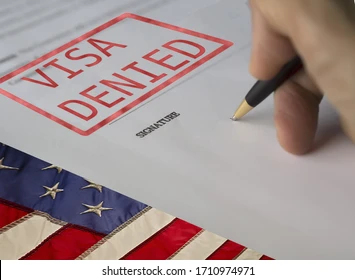
I still remember exactly where I was standing when I got the email. Not a phone call, actually an email, sitting in my inbox between a grocery store promo and a reminder to renew my gym membership. The subject line just said “Update on your application.” I’d applied for permanent residency eighteen months earlier, confident, prepared, organised. I thought I had this.
I didn’t.
The refusal letter cited a “failure to maintain status” during a four-month stretch two years prior, when I’d taken a reduced course load while dealing with a family emergency back home. At the time, nobody told me that dropping below full-time status — even temporarily, even for legitimate reasons — could resurface years later as a black mark on a residency application. I didn’t even know it was a condition I’d broken. I thought as long as I eventually graduated, I was fine.
I wasn’t fine. And I’m writing this because I don’t want you to find out the way I did months after the fact, with a rejection letter in your hand and thousands of dollars in legal fees ahead of you to fix it.
This isn’t a textbook article. This is what actually happens, what actually trips people up, and what I genuinely wish someone had sat me down and told me on day one.
What Nobody Tells You About “Maintaining Status”
Here’s the thing about visa conditions, they’re not really designed to be obvious. They’re scattered across your visa grant letter, your study permit conditions, your work permit conditions, immigration department websites, and sometimes verbal advice from a school administrator who may or may not actually know immigration law.
“Maintaining status” sounds like a simple concept. In reality, it means different things depending on your visa type, and breaking it doesn’t always trigger an immediate consequence. That’s the trap. You don’t get an alarm bell when you slip below full-time enrollment, or when you work two extra hours a week beyond your permit limit, or when you don’t update your address within the required window. Nothing happens. No email, no warning, no rejection at the border.
Instead, it just sits there. Quietly. In your immigration file. Waiting for the moment years later when an officer reviewing your permanent residency application pulls your full history and finds a gap, an inconsistency, a technical violation you didn’t even know you’d committed.
I want to be honest with you: this is the part that made me angriest when I went through it. Not that I’d made a mistake I could own that. What made me angry was that the mistake was so easy to make and so invisible in the moment. Nobody flags it. Nobody warns you. The system just lets you keep going, and the bill comes due later.
The Five Hidden Conditions That Quietly Wreck PR Applications
After going through my own rejection, appealing it, and then spending an embarrassing amount of time talking to immigration consultants, other students, and forums full of people in the same boat, I started noticing patterns. The same five issues kept coming up again and again. Not dramatic immigration fraud. Small, boring, technical things.
1. Dropping below full-time study without authorization
If you’re on a study permit, “full-time” usually isn’t optional — it’s a condition baked into your status. Switching to part-time for a semester because you’re overwhelmed, sick, grieving, or just burnt out feels like a personal academic decision. Immigration doesn’t see it that way. Unless you formally applied for a leave of absence or got documented authorization, it can be read as a status violation.
2. Working more hours than your permit allows
Most study permits cap off-campus work at a certain number of hours per week during academic sessions. The cap exists for a reason, but the reality of needing money doesn’t disappear just because the cap does. A lot of people quietly work a few extra hours here and there, assuming nobody’s tracking it. Sometimes nobody is — until your PR officer cross-references your tax filings against your study permit conditions and the math doesn’t add up.
3. Unexplained gaps between permits
If your work permit expires on a Tuesday and your new one doesn’t start until the following Monday, and you stayed in the country anyway without applying for restoration of status, that gap is now part of your record. Even a few days. Even if you genuinely didn’t know you needed to apply for anything.
4. Not updating your address or contact information
This sounds almost too trivial to matter, but address reporting requirements are conditions of your visa, not just a courtesy. If a letter gets sent to an old address and you miss a deadline because of it, immigration doesn’t generally accept “I moved and forgot to update it” as a valid excuse.
5. Inconsistent answers across different applications
This one is sneaky. Maybe on your study permit application you listed your intended length of stay as “until I finish my degree,” and three years later on a work permit application you wrote something that implied a longer-term plan to settle permanently when your study permit was explicitly tied to “non-immigrant intent.” Officers compare these documents. Contradictions, even unintentional ones, raise flags.
The Working Hours Trap Almost Everyone Falls Into
I want to spend a bit more time here because this is the one I see trip up the most people in my own circle of friends.
When you’re a broke student trying to survive in an expensive country, the 20-hours-a-week cap (or whatever your specific limit is) can feel almost cruel. Rent doesn’t care about your visa conditions. Neither does the price of groceries. So people stretch it. A few extra hours during a slow week at the restaurant. Picking up an extra shift because a coworker called in sick. None of it feels like a big deal in the moment.
Here’s what I learned the hard way: immigration systems increasingly cross-reference data between government departments — tax records, payroll reporting, and visa conditions are not as siloed as people assume. It might not catch you immediately. It might not catch you at all during your study permit period. But years later, when a PR officer is reviewing your full work history against your historical visa conditions, discrepancies surface.
My advice, as someone who’s been through this: if you are financially desperate, talk to your school’s international student office about emergency funds, food banks, or hardship grants before you quietly break your hours cap. It’s not exciting advice. It’s not what you want to hear when you’re stressed about rent. But it’s a lot less painful than a PR rejection five years later.
Gaps in Study or Work: The Silent Killer
Let me tell you about my friend Daniel, but his story is too common not to share. Daniel finished his undergraduate degree and had about six weeks before his post-graduation work permit was approved. He assumed, like most people do, that this was a normal administrative gap and nothing to worry about.
Five years later, when his PR application was being reviewed, an officer asked him to explain that six-week period. He had no documentation. He couldn’t remember exactly what he’d been doing. He hadn’t applied for a “maintained status” extension because he genuinely didn’t know that was a thing he needed to do — he was just waiting for his permit, like everyone does.
It delayed his application by eight months while he scrambled to reconstruct a timeline from old emails, bank statements, and a borrowed memory.
The lesson: any gap, no matter how small or seemingly harmless, needs a paper trail. If you’re between permits, even briefly, look into whether you need to apply for maintained status or implied status, and keep records of everything like emails, receipts, even simple notes about your daily activities during that window. You may never need them. But if you do, you’ll be glad you have them.
Address and Reporting Requirements Nobody Reads
I’ll be honest, I didn’t read my study permit conditions in full when I first got them. I skimmed for the important stuff such as expiry date, work hour limits and moved on. I suspect most people do the same.
Buried in there, though, are reporting obligations: updating your address within a set number of days of moving, sometimes notifying immigration of changes to your program or institution, and other small administrative duties that feel bureaucratic and pointless until the one time they aren’t.
What I do now, and what I’d recommend to literally everyone reading this: the moment you get any new visa or permit, read every single condition listed on it, even the boring ones. Take a screenshot. Save it in a dedicated folder. Set a calendar reminder for any recurring obligations.
The “Genuine Intention” Question That Catches People Off Guard
This is the trickiest one to explain because it’s not really a rule but it’s more of an underlying principle that shapes how officers interpret everything else.
Many study and temporary work visas are built on the legal premise that you intend to leave the country after your authorized stay ends, unless and until you transition properly to a different status. Permanent residency applications later ask you to essentially demonstrate the opposite that you now intend to stay permanently.
This isn’t usually a contradiction in itself; transitioning from temporary to permanent status is exactly what these systems are designed to allow. But the way you’ve described your intentions across different forms over the years needs to hang together as a coherent, honest story. If your study permit application emphasized strong ties to your home country and a firm intention to return, and your PR application several years later doesn’t address how or why that changed, it can look inconsistent rather than like a natural, evolving life decision.
My honest advice: when you fill out any new application, briefly think through how it fits with what you’ve said before. You don’t need to be paranoid about it. You just need to be truthful and consistent, and if your circumstances genuinely changed, be ready to explain that change clearly.
How I Fixed My Own Mess And What I’d Do Differently
After my rejection, I didn’t just give up. I hired an immigration consultant a real one, properly licensed, not someone’s cousin who “knows the system.” We rebuilt my timeline from scratch. I pulled old bank statements, old emails with my academic advisor about my reduced course load, a letter from my doctor about the family emergency that caused it, and we submitted a detailed explanation alongside a fresh application.
It worked. But it cost me close to a year of additional waiting, several thousand dollars in consultant fees, and an enormous amount of stress that I genuinely believe affected my health during that period.
If I could go back, here’s exactly what I’d do differently:
- I would have told my school immediately when I dropped to part-time and asked specifically what that meant for my visa status, instead of assuming it was purely an academic matter
- I would have kept a simple folder be it digital or physical with every visa document, condition, and any communication with my school or employer about my status
- I would have asked an immigration consultant a few clarifying questions early on, even just a one-off paid consultation, instead of waiting until something went wrong
- I would have never assumed “no news is good news” when it came to visa compliance
Tools and Services That Actually Helped Me
These are services I genuinely used or that people in my position have found valuable. I’m not a lawyer, and none of this replaces professional legal advice for your specific situation but these are solid starting points.
VisaGuide.World A good general resource for understanding visa categories and conditions across different countries before you commit to a specific pathway.
[SmartTraveller / Government Immigration Portals] Always start with your destination country’s official immigration website. It sounds obvious, but the official conditions list is the one document that actually matters legally, more than any forum post or even this article.
Wise Not immigration-related directly, but keeping clean, well-documented financial records which Wise makes easy with statement exports genuinely helped me prove my financial timeline when reconstructing my case.
An independent, licensed immigration consultant or lawyer I can’t recommend a specific one for your country, but I’d strongly encourage budgeting for at least one paid consultation early in your visa journey, not just when something goes wrong. Many offer affordable single-session reviews specifically to check your status history for hidden issues before you apply for PR.
Sprintax While primarily a tax tool for international students in the US, keeping clean tax records that align with your declared work hours is one of the most overlooked ways to protect yourself when PR officers cross-reference your history.
Frequently Asked Questions
Q: I think I may have broken a visa condition years ago. Should I bring it up myself or wait to see if it’s flagged?
In most cases, being proactive is safer than hoping it goes unnoticed. Immigration systems are increasingly interconnected, and a voluntary, honest explanation submitted with supporting documents is viewed far more favourably than an officer discovering an unexplained gap or inconsistency on their own. Talk to a licensed immigration consultant about how to address it before submitting your PR application.
Q: Does a single instance of working a few extra hours actually get caught?
It’s impossible to say with certainty in every case, and enforcement varies significantly by country and by individual circumstances. What I can tell you is that the risk isn’t worth it relative to the financial hardship of a few extra dollars per week. If you’re struggling financially, look into legitimate support options through your school first.
Q: What counts as “maintained status” if I’m between permits?
This varies by country, but generally it means you applied for your new permit or an extension before your current one expired, and you’re legally allowed to continue under your previous conditions while waiting for a decision. If you let your permit lapse entirely before applying for a new one, you may not be covered, and that gap can become a problem later. Check your specific country’s rules and, when in doubt, apply early rather than at the last moment.
Q: Can a part-time semester for medical or family reasons really hurt my PR application?
It can, if it wasn’t properly authorized or documented at the time. The issue usually isn’t the reduced course load itself rather it’s the lack of a paper trail showing that it was approved, explained, or otherwise legitimate. If you’re currently going through something similar, talk to your school’s international office now and get any leave of absence or accommodation properly documented in writing.
Q: I’m currently mid-way through my studies. What’s the single most useful thing I can do today?
Read every condition on your current visa or permit in full, today, even the parts that feel irrelevant. Save a copy. Then create a simple folder, digital or physical, where you keep every piece of documentation related to your status such as enrollment letters, work permit details, any communication about leaves of absence or status changes. Future-you will be deeply grateful.
Q: Should I be worried, or is this overblown?
You shouldn’t be paralyzed by fear, but you should be informed. The vast majority of people maintain their status correctly and never run into these issues. The point of sharing my story isn’t to scare you rather it’s to make sure you know what to look out for so a small, fixable oversight doesn’t quietly turn into a major setback years down the line.
This article reflects one person’s personal experience and general patterns observed across international student and immigration communities. It is not legal advice. Immigration rules vary significantly by country and change frequently therefore always verify your specific conditions with your country’s official immigration authority or a licensed immigration professional before making decisions about your status.