Introduction
The envelope was thin. I knew before I even opened it.
I’d spent four months gathering documents such as bank statements, employment letters, university enrollment proof, a sponsorship letter from my aunt in Ohio who’d been a U.S. resident for eleven years. I’d rehearsed answers to questions I found on immigration forums at 2 a.m. I’d ironed my shirt twice the morning of the interview. I’d prayed in the car park before walking into the consulate.
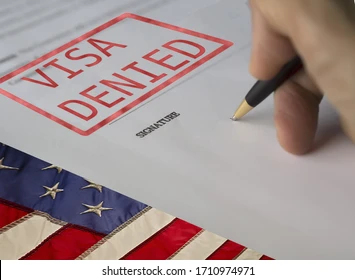
The interview lasted six minutes. The officer barely looked up. She slid a blue sheet across the counter, said “your application has been refused,” and called the next person.
The slip said: Section 214(b).
I had no idea what that meant. My mother called from home asking what happened and I didn’t even have the language to explain it to her. I just sat in the car park where I’d prayed an hour earlier, holding a piece of paper that felt like it had closed a door I’d been walking toward for two years.
That was my first U.S. visa refusal. It wasn’t my last. But eventually after understanding what those codes actually meant, what officers were really looking for, and how to address each specific ground of refusal I got my visa. And I want to give you what nobody gave me that afternoon in the car park: a clear explanation of what your rejection letter actually says, and a practical path forward.
What To Expect From This Guide
- Why Visa Refusal Letters Are So Vague
- The Most Common U.S. Visa Refusal Codes Explained
- Section 214(b): The Most Frequent Refusal and What It Really Means
- Section 221(g): The One That’s Not Actually a Final Refusal
- Immigrant Intent vs. Non-Immigrant Intent: The Core Issue
- My Story: Three Applications, Two Refusals, One Visa
- UK, Schengen, Canada How Their Refusal Codes Differ
- How to Respond to a Refusal: A Step-by-Step Guide
- When to Reapply vs. When to Appeal
- Documents That Actually Move the Needle
- Hiring an Immigration Attorney: Is It Worth It?
- Frequently Asked Questions
- Recommended Resources & Tools
- Conclusion
1. Why Visa Refusal Letters Are So Vague
The first thing most people do after receiving a refusal is read the letter over and over hoping to find a specific reason. They don’t find one. That’s not an accident.
U.S. consular officers operate under a doctrine called consular nonreviewability which essentially means their decisions are nearly immune to judicial challenge. They are not required by law to explain their reasoning in detail. The refusal letter cites a section of the Immigration and Nationality Act (INA), and that’s often all you get.
This isn’t unique to the U.S. The UK Home Office refusal notices are somewhat more detailed but still often rely on boilerplate language. Schengen refusals are required by EU regulation to state specific grounds, but in practice they can be remarkably thin.
The vagueness is frustrating, but it’s workable if you understand what each code actually signals.
2. The Most Common U.S. Visa Refusal Codes Explained
Here are the INA sections you’re most likely to see on a U.S. nonimmigrant visa refusal:
Section 214(b) — Failure to Overcome Presumption of Immigrant Intent The most common refusal for tourist (B-1/B-2), student (F-1), and exchange visitor (J-1) visas. More on this below.
Section 221(g) — Application Incomplete or Pending Further Review Not technically a refusal rather it is more of an administrative hold. Your application is pending additional documents or security checks. More on this below too.
Section 212(a)(2) — Criminal Grounds Covers arrests, convictions, drug offences, and certain trafficking-related activities. The bar can be high or insurmountable depending on the specific offence.
Section 212(a)(3) — Security and Related Grounds Terrorism-related grounds, espionage concerns, foreign policy grounds. Rarely cited but serious when it appears.
Section 212(a)(4) — Public Charge The officer believes you are likely to become primarily dependent on government assistance. Heavily weighted on financial documentation and sponsor situations.
Section 212(a)(6)(C) — Misrepresentation You provided false information, either in your current application or in a previous one. This can result in a permanent bar, depending on severity.
Section 212(a)(9)(B) — Unlawful Presence You previously overstayed a U.S. visa. Depending on how long, you may be barred for 3 years, 10 years, or permanently.
3. Section 214(b): The Most Frequent Refusal and What It Really Means
Section 214(b) of the Immigration and Nationality Act states that every applicant for a nonimmigrant visa is presumed to be an intending immigrant unless they can prove otherwise.
Read that again. You are assumed guilty of wanting to immigrate until proven innocent.
The officer’s job isn’t to give you the benefit of the doubt. Their job is to evaluate whether you’ve provided sufficient evidence that you will return home after your authorised stay. If they’re not convinced, they refuse under 214(b).
What “Ties to Your Home Country” Actually Means
Officers evaluate your “ties” the factors in your life that make it likely you’ll go back home:
- Employment — Do you have a stable job waiting for you? A contract? A business you own?
- Family — Do you have a spouse, children, or dependents at home who rely on you?
- Financial roots — Do you own property? Have significant assets in your home country?
- Educational enrollment — Are you enrolled in a program with a defined end date?
- Community ties — Professional affiliations, long-term leases, utility accounts — all of it tells a story
A 22-year-old single applicant with no job, no property, no dependents, and a cousin in New Jersey is going to struggle with 214(b). Not because they’re dishonest, but because on paper, they have fewer demonstrated reasons to come back.
What a 214(b) Refusal Is NOT Telling You
It is not telling you:
- That you are a bad person
- That you intended to overstay
- That you will never get a visa
- That you lied about anything
It’s telling you that on this day, with this evidence, this officer was not convinced. That’s fixable.
Keywords: section 214b visa refusal, how to overcome 214b refusal, ties to home country visa
4. Section 221(g): The One That’s Not Actually a Final Refusal
If your letter cites 221(g), breathe. This is not the same as 214(b).
Section 221(g) means one of two things:
a) Your application is incomplete. You’re missing a document — a photograph, a form, a fee, a supporting letter. The officer wants you to submit it, and once you do, the application continues.
b) Your application has been placed in administrative processing. This is the more stressful version. Your application is undergoing additional background checks, sometimes a security clearance process, sometimes verification of documents, sometimes coordination with other government agencies. This can take weeks. It can take months. In some cases, it takes over a year.
What to Do With a 221(g)
- If it’s a document request: submit exactly what they asked for, nothing more. Don’t overwhelm the case with unrequested extras.
- If it’s administrative processing: check your status at ceac.state.gov. When it moves from “Administrative Processing” to “Issued” or “Refused,” you’ll know the outcome.
- Do not call the embassy daily. Do not submit new documents that weren’t requested. Wait unless you’ve been specifically asked to act.
5. Immigrant Intent vs. Non-Immigrant Intent: The Core Issue
Almost every nonimmigrant visa refusal comes back to this single tension: does this person intend to stay?
The entire U.S. nonimmigrant visa framework is built on temporary intent. You are applying for permission to visit, study, or work temporarily and then return. The officer’s primary job is to assess whether they believe you.
Here’s the uncomfortable truth: intent is invisible. Officers can’t read minds. So they look for proxies the circumstances of your life that make temporary stay credible.
The strongest proxies for legitimate non-immigrant intent:
- A job you’d be giving up significant income to leave permanently
- Property ownership in your home country
- A spouse or children who depend on your physical presence
- An accepted offer at a university in your home country that you’d be returning to
- A business with employees that requires your ongoing presence
- A return ticket already purchased (though this alone is never sufficient)
The weakest situations for demonstrating non-immigrant intent:
- Young, single, unemployed applicant with no financial assets
- Applicant whose immediate family has largely emigrated to the destination country
- Applicant with previous visa overstays or violations
- Applicant whose stated purpose is vague or inconsistent
This doesn’t mean people in these situations can’t get visas, they can and do. It means they need to work harder on their documentation and interview preparation to address these gaps proactively.
6. My Story: Three Applications, Two Refusals, One Visa
My first refusal, the 214(b), I’ve already told you about. I was 24. I was applying for a B-2 tourist visa to visit my aunt. I was employed but in a junior role I’d held for seven months. I had no property. No dependents. My aunt and two cousins already lived in the U.S.
Looking back, I understand the officer’s position completely. On paper, I was exactly the profile that doesn’t come back.
My second application, eight months later, I added an employment letter, a letter from my employer confirming leave approval and that my role would be held, and a bank statement showing three months of consistent salary deposits. I felt prepared.
Refused again. 214(b).
What I hadn’t addressed was the family situation. Three of my four closest relatives were already in the U.S. That’s a significant counterweight to the ties argument, and I’d never even acknowledged it in my application. I’d basically handed the officer the same concern without dismantling it.
Before my third application, I spoke to an immigration consultant though not a full attorney, but someone who’d worked at a consulate and understood how officers think. She told me something that changed my entire approach:
“Don’t just prove you have reasons to return. Address the reasons they might think you won’t.”
My third application directly acknowledged my family situation and explained that my aunt and cousins had emigrated years before me, that I had remained in my home country deliberately to build my career, that I had recently been promoted and taken on management responsibilities that would be difficult to abandon, and that I had enrolled in a part-time professional certification course that I was midway through.
I also brought a clear itinerary, hotel bookings, and a letter from my aunt confirming the visit was for a specific family occasion with a defined end date.
The interview lasted nine minutes. The officer asked me three questions. My visa was approved.
The difference wasn’t luck. It was understanding what I was actually being evaluated on.
7. UK, Schengen, Canada How Their Refusal Codes Differ
United Kingdom
UK Standard Visitor Visa refusals come with a refusal notice that is generally more detailed than a U.S. refusal letter. The Home Office is required to give reasons under UK immigration rules. Common refusal grounds include:
- Paragraph V 4.2(a): Not satisfied the visit is genuine
- Paragraph V 4.2(b): Not satisfied you’ll leave at the end of the visit
- Paragraph V 4.2(c): Financial insufficiency you can’t maintain yourself without recourse to public funds
UK refusals are more actionable because they’re more specific. You can generally understand exactly what evidence gap to fill.
Right of appeal for UK visit visa refusals is extremely limited since 2014. Administrative review is available if you believe there was a case-working error.
Schengen Area (EU)
Under the EU Visa Code, consulates are legally required to give specific reasons for refusal from a defined list. Common codes include:
- D: Purpose/conditions of stay not justified
- B: Insufficient means of subsistence
- C: Alert in Schengen Information System
- H: Previous overstay
Schengen refusals must include notification of your right to appeal, and the appeal process varies by country like Germany, France, Spain, and others each have different administrative appeal systems.
Canada
Canadian visa refusals cite sections of the Immigration and Refugee Protection Act (IRPA). The most common grounds:
- Section 11(1): Officer not satisfied the applicant will comply with the Act
- Section 179(b): Failure to satisfy that applicant will leave Canada
- Financial insufficiency
- Incomplete application
Canada introduced the eTA system for many visitors, and electronic travel authorization refusals are even less detailed. However, Canada also offers IRCC webform inquiries and, in some cases, formal reconsideration requests.
Keywords: UK visa refusal reasons, Schengen visa refusal codes, Canada visa refusal grounds, how to appeal UK visa refusal
8. How to Respond to a Refusal: A Step-by-Step Guide
Step 1: Read the Letter Carefully, More Than Once
Identify the specific code. Look for any additional handwritten or typed notes from the officer. Some officers add brief comments that clarify what specifically concerned them. If yours did, that’s gold.
Step 2: Do Not Reapply Immediately
The single most common mistake people make after a refusal is filing a new application within days or weeks with minimal changes. Consular officers can see your application history. Submitting the same application twice signals that you haven’t understood the concern. Give yourself time to genuinely address the issues.
Step 3: Conduct an Honest Self-Assessment
Ask yourself:
- What does my profile look like on paper to a stranger?
- What would make someone doubt I intend to return home?
- What evidence am I missing that would address those doubts?
Step 4: Build a Stronger Evidence Package
Address the specific refusal ground. For 214(b), focus on ties. For 212(a)(4), focus on finances. For 221(g) document requests, provide exactly what was asked.
Step 5: Prepare Your Interview Answers More Carefully
If your interview is what sank the application, think hard about your answers. Were they vague? Did you contradict your documents? Were you nervous and rushed? Practice answering clearly, concisely, and consistently with your written application.
Step 6: Reapply When You Are Genuinely Ready
Not when you feel desperate. Not because a family event is approaching. When your evidence package genuinely addresses the grounds of refusal.
9. When to Reapply vs. When to Appeal
This depends entirely on the country and the type of refusal.
United States: There is no formal appeal process for most nonimmigrant visa refusals. Consular nonreviewability means the decision is essentially final. Your option is to reapply with stronger evidence. Waivers are available for some specific inadmissibility grounds (like criminal records) through Form I-601.
United Kingdom: You can request an administrative review if you believe there was a procedural error. This is not the same as a merit-based appeal. A full appeal right generally only exists for refusals that involve human rights considerations.
Schengen: Each member state has its own appeal process. Some allow full administrative appeals; others have very short windows (sometimes 15–30 days). Research the specific country’s process immediately upon refusal.
Canada: Formal appeals through the Immigration Appeal Division (IAD) are available for certain visa categories. For standard visitor visas, judicial review through Federal Court is technically possible but expensive and rarely practical.
General rule: If reapplication is your realistic option, do it properly. If appeal is available and you believe there was a genuine error, pursue it but know that appeals are slow, costly, and uncertain.
10. Documents That Actually Move the Needle
From experience, mine and watching others go through this process here are the documents that genuinely strengthen a nonimmigrant visa application:
For 214(b) — Ties to Home Country:
- Employment letter on official letterhead confirming position, salary, and approved leave
- Property title deed or mortgage documents
- Business registration documents if self-employed
- Evidence of ongoing study enrollment
- Family documents like marriage certificate, children’s birth certificates
- Bank statements showing consistent regular deposits (salary pattern), not just a high balance
For 212(a)(4) — Public Charge:
- Six months of detailed bank statements
- Sponsor’s Form I-134 (Affidavit of Support) with supporting financial evidence
- Evidence of health insurance coverage for the visit
- Property or investment portfolio statements
For 221(g) — Administrative Processing:
- Exactly what was requested on the refusal notice, nothing more
- Any additional identity or travel documents if requested
What often doesn’t help as much as people think:
- A single large bank deposit made days before the application (officers recognise this pattern)
- Hotel bookings for the entire trip duration (looks rigid, not genuine)
- Excessive character reference letters from uninvolved parties
- Round-trip flight itineraries alone (necessary but not sufficient)
11. Hiring an Immigration Attorney: Is It Worth It?
For straightforward tourist or student visa applications, a full immigration attorney is usually not necessary and can be expensive. For more complex situations, the calculus changes.
Consider hiring an attorney or accredited representative if:
- You have a criminal record of any kind
- You have previously overstayed a visa
- You have had multiple prior refusals
- Your refusal cites 212(a) inadmissibility grounds (not just 214(b))
- You are applying for an immigrant visa or adjustment of status
- Your situation involves fraud allegations or misrepresentation concerns
For most standard 214(b) refusals: A qualified immigration consultant or accredited representative (cheaper than a full attorney) can review your application and give you targeted advice. Alternatively, many nonprofit immigration legal services organisations offer free or low-cost consultations.
Be cautious of:
- “Visa agents” who guarantee approvals because nobody can guarantee a visa
- High upfront fees with vague services
- Anyone who suggests submitting misleading or fabricated documents
I recommend using verified referral services for finding qualified help.
- Boundless Immigration Affordable immigration help with attorney review for U.S. applications
- SimpleCitizen Guided immigration applications with legal review
- RapidVisa Document preparation service for visa applications
- VisaPlace Canadian immigration legal services
12. Frequently Asked Questions
How long should I wait before reapplying after a 214(b) refusal?
There’s no mandatory waiting period, but most immigration professionals recommend waiting at least 3–6 months is long enough to meaningfully change your circumstances or documentation. Reapplying after two weeks with the same package almost never works.
Does a visa refusal affect future applications to other countries?
Some countries including Canada, Australia, and the UK will ask whether you’ve ever been refused a visa anywhere. You must answer this honestly. A single prior refusal doesn’t automatically result in denial elsewhere, but dishonesty about it can.
My visa was refused but I need to travel urgently. What are my options?
Unfortunately, urgency doesn’t change the consular officer’s assessment. Emergency or expedited appointments may be available in some cases, but officers still apply the same standards. Rushing into a reapplication without addressing the refusal grounds is rarely effective.
Can a refusal under 214(b) become permanent?
No. Section 214(b) is not an inadmissibility ground it’s a finding about current evidence. You can overcome it by strengthening your ties and documentation. It does not create a permanent bar.
The officer didn’t ask me any questions. Is that normal?
Yes. Officers are experienced at forming assessments quickly. Some approvals and refusals are made with very minimal questioning. The decision is largely based on the documentary record and first impression.
My application included everything. Why was I still refused?
Having complete documents doesn’t guarantee approval. The officer must be convinced by those documents, not just presented with them. The way you present information, the consistency between your interview answers and your documents, and the overall credibility of your narrative all matter.
I was refused for 212(a)(6)(C) for misrepresentation. Is that permanent?
A finding of willful misrepresentation under 212(a)(6)(C) can result in a permanent bar from the U.S. A waiver (Form I-601) may be available in specific circumstances, typically for immediate relatives of U.S. citizens or permanent residents facing extreme hardship. This situation absolutely warrants consulting an immigration attorney.
Does having a U.S. citizen relative hurt my visa application?
Not automatically, but it can create a perception challenge around immigrant intent especially if that relative is a close family member. The solution isn’t to hide the relationship (never lie on an application) but to proactively demonstrate the ties in your home country that make return credible despite the U.S. connection.
13. Recommended Resources & Tools
Free Official Resources:
- travel.state.gov U.S. visa information, wait times, and refusal statistics by country
- ceac.state.gov Track U.S. visa application status
- gov.uk/visa-immigration UK visa guidance and application status
- ec.europa.eu/home-affairs Schengen visa information
Paid Services
- Boundless Immigration Attorney-backed U.S. immigration applications
- SimpleCitizen Step-by-step guided applications with legal review
- RapidVisa Document preparation for U.S. visa petitions
- VisaPlace Canadian immigration law firm with online consultations
- iVisa eVisa and travel document processing for multiple countries
Communities Worth Joining:
- r/immigration on Reddit — Real applicant experiences and active community support
- VisaJourney.com — Detailed timelines and data from real visa applicants
14. Conclusion
I sat in that car park for about forty minutes after my first refusal. Eventually I drove home, told my mother I’d been refused, and listened to her try to comfort me through a bad phone connection. It felt enormous at the time like a verdict on my worthiness rather than a bureaucratic assessment of a paper file.
It wasn’t a verdict. It was a gap analysis.
Every visa refusal, at its core, is the officer saying: I’m not yet convinced. That’s a solvable problem. Not always quickly, not always cheaply, and not without frustration but solvable.
Understanding the code on your refusal letter is the first step. It tells you what specifically wasn’t convincing. From there, the path forward is practical: address the gap, build the evidence, present a cleaner story, and go back.
Your visa story isn’t over because of one piece of paper slid across a counter. I promise you that.
Found this helpful? Share it with someone sitting on a refusal letter right now they need to know their options.
Disclaimer: This post is for general informational purposes only and does not constitute legal advice. Immigration law is complex and country-specific. Always consult a licensed immigration attorney or accredited representative for advice tailored to your circumstances. Some links in this post are affiliate links; I may earn a commission at no extra cost to you.