Real talk from someone who got a £900 bill they didn’t expect and learned everything the hard way.
Introduction
Let me set the scene for you for proper understanding.
It’s a Tuesday afternoon. You’ve just moved into a new flat in Manchester or Birmingham, or Leicester, doesn’t matter. You’re excited. You’ve got your student ID, your CAS number, your visa. You’ve survived the flight, the culture shock, the food miss. You’re doing the thing. You’re actually here.
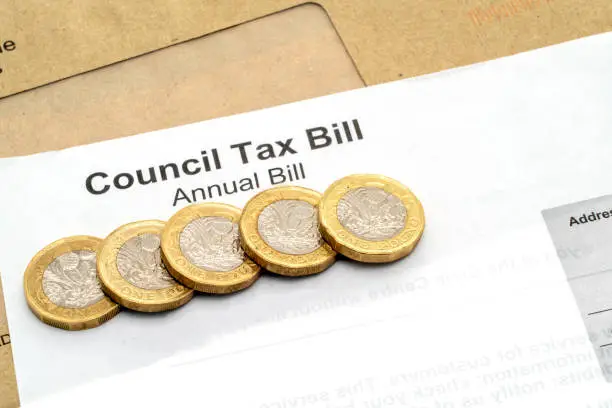
Then a brown envelope arrives with the council’s logo on it.
You open it. It says you owe £847 in council tax, and if you don’t pay within 14 days, they’re taking further action.
Your heart drops.
This moment is common or it happens to Nigerian students in the UK every single year. Not because they’re doing anything wrong. Not because they owe the money. But because nobody properly explained how the council tax exemption system works before they left Lagos, Abuja, Port Harcourt, Enugu. Nobody told them what to do when the bill arrives. And some of them, scared of anything official that looks like a debt, just… pay it. Thousands of naira equivalent, straight into the council’s pocket, for something they were never legally required to pay.
I’ve spent years helping Nigerian students navigate life in the UK. I’ve seen this play out more times than I can count. So, let me break it down properly not like a government webpage, but like a friend who has read every confusing paragraph of this system so you don’t have to.
Things to learn from this guide:
- What Is Council Tax and Why Should You Care?
- Who Qualifies?
- The Process: How to Actually Claim It
- The Situations Nigerians Get Tripped Up On
- The NRPF Misconception That Costs Nigerians Money
- A Practical Checklist for Nigerian Students
- The Bigger Picture
First: What Is Council Tax and Why Should You Care?
Council tax is a local tax that every adult in the UK is expected to contribute toward local services things like rubbish collection, street lighting, emergency services. The average Band D rate in England is around £2,171 per year. For a typical student in London or a major city, that’s money you absolutely cannot afford to be paying unnecessarily.
The important thing to know is that full-time students in the UK are exempt from paying council tax. This isn’t a favour or a discount. It is a legal exemption. You are not liable. The bill does not belong to you.
But this is where it gets complicated because the system does not automatically know you are a student. The council does not receive a list of enrolled students from your university every September. You have to tell them. You have to apply. And if you don’t, the bill keeps coming, and eventually it can escalate to enforcement action.
The exemption is yours by right. Claiming it is your responsibility.
Who Qualifies? Let’s Be Precise
A lot of the generic information online is vague on this point, so let me be specific, because the definition of “full-time student” for council tax purposes is a legal one, not just “whatever you think full-time means.”
To qualify as a full-time student for council tax exemption purposes, your course must meet both of these conditions:
It must last at least one academic or calendar year, and it must require you to undertake at least 21 hours per week of study, tuition, or work experience, for at least 24 weeks in that year.
Most standard undergraduate degrees and postgraduate taught programmes at UK universities meet this criteria. If you’re on a one-year Master’s programme, a three-year Bachelor’s degree, or a PhD, you’re almost certainly covered.
What doesn’t qualify? Part-time courses. If you are enrolled part-time, you are not exempt. End of story, no arguments. You may be eligible for a Council Tax Reduction which means-tested benefit based on income, but you cannot claim the student exemption. Many Nigerian students in the UK who start as full-time and then drop to part-time because of work or personal pressure don’t realise that the moment they do that, the council tax clock starts running against them.
Also worth knowing: short courses that don’t meet the duration or hours criteria don’t qualify either. If you’re doing a three-month professional certification, you’re not covered.
The Process: How to Actually Claim It
This is the part where people go wrong most often, so I’m going to walk you through it slowly.
Step 1: Get your council tax student exemption certificate from your university.
This is a document your university’s student services or registry department issues that confirms you are enrolled full-time on a qualifying course, along with your course start and end dates. It is not your student ID card. It is not your offer letter. It is a specific document called a council tax certificate or student status letter for council tax purposes, and it must come from your institution.
Universities are legally required to provide this to you, free of charge, on request. Most universities now have a self-service portal where you can download it instantly at QMUL it’s through MySIS, at UCL it’s through Portico, at King’s it’s through Student Services Online. If yours doesn’t have an online option, email your student services team and ask. They will not charge you. If anyone tries to charge you for this document, that is wrong.
Step 2: Contact your local council and apply for the exemption.
Every council has its own process, but most allow you to apply online. Go to your council’s website not a generic government page but your specific local council’s website, find the council tax section, and look for “student exemption” or “full-time student discount.” Upload your certificate.
Some councils will sort it within a week. Some take longer. Keep a record of your application.
Step 3: If you receive a bill in the meantime, do not ignore it.
This is crucial. If a bill arrives before your exemption is processed, the instinct for many Nigerian students is either to panic and pay, or to ignore it hoping it sorts itself out. Both are wrong. Contact the council directly, explain you’ve submitted a student exemption application, and ask them to note your account. They will usually pause enforcement while they review your claim.
Ignoring official council tax letters in the UK can escalate to court summons and even bailiff action in serious cases. I have seen this happen. Don’t let pride or confusion allow a small administrative issue to become a legal one.
The Situations Nigerians Get Tripped Up On
Here’s the lived experience part the stuff the official guidance glosses over.
“I moved in before my course started”
You’ve arrived in the UK in August. Your course starts in late September. You’ve signed a tenancy agreement because you needed to secure your accommodation early. During those weeks between moving in and your course start date, you are liable for council tax. Your exemption doesn’t apply yet because you’re not yet enrolled.
I’ve seen Nigerian students get bills for exactly this period sometimes just two or three weeks and be completely blindsided. It’s a small amount, but it’s real, and you won’t be able to retroactively claim exemption for it. If you can avoid signing your tenancy too early, do so. If you can’t, budget for a short period of council tax liability.
“My course has ended but I haven’t left my flat yet”
Your official course end date is in June. You’ve sat your exams. But your tenancy runs to August and you’re staying in the flat while you wait for graduation, or waiting to fly home, or transitioning to a new visa. From the day after your official course end date, you become liable for council tax.
I cannot stress this enough because it catches so many people out. The exemption ends with the course, not with the tenancy. Not with graduation day. Not when you physically get on the plane. The moment your official end date passes on your student record, the clock starts.
If you’re staying in the UK after your course and switching to a Graduate Visa, for example, you will owe council tax for any period between your course ending and either leaving or entering another qualifying period of study. Plan for this.
“I’m between courses, I finished my undergrad and I’m starting a Master’s in September”
This is a gap period, and you are liable for council tax during it. Citizens Advice makes this clear: if you’re between formal courses, you are not within the protected period of either, and the exemption does not apply. Many students finishing their Bachelor’s degree and waiting to start a postgraduate programme get blindsided by a council tax bill arriving in July.
What to do: contact the council the moment you finish your first course, confirm your liability start date, and set up a monthly payment plan to manage the gap. When your new course starts, submit a fresh exemption certificate and your account will be recalculated. You’ll only pay for the gap period.
“I live with my partner / spouse who isn’t a student”
This is a big one for Nigerian students, especially given that until 2023, many Nigerian students brought their spouses to the UK as student dependants.
Important 2024 update: From January 2024, only PhD students and students on government-funded scholarships like Chevening or Commonwealth can bring dependants to the UK on a student visa. If you’re on an undergraduate or taught Master’s programme, you can no longer bring your spouse or children as dependants at all.
However, for those who already have a non-student spouse or adult dependant living with them (either under earlier rules or through other visa routes), the council tax situation works like this:
If your non-student spouse or dependant has a visa with a “no recourse to public funds” condition which most dependant visas attached to student visas carry, they are also disregarded for council tax purposes. Meaning they don’t count as a liable adult. This means your property may still be fully exempt or receive significant discounts.
The Edinburgh council guidance makes this plain: if an international student and their non-student spouse both live in a flat, and the spouse has NRPF conditions on their visa, both are disregarded meaning only the other adults in the property are counted.
If your spouse has a visa without NRPF conditions, or if they have indefinite leave to remain, the rules are different and more complex. In that case, they will likely be counted as a liable adult and the property won’t be fully exempt, though you may qualify for a single-person discount since you as the student are disregarded.
“I’m in the writing-up stage of my PhD”
PhD students who have submitted their thesis and are waiting for their viva, or who are technically in a “writing up” period after their formal teaching has ended, hit a grey area. Some councils accept that you’re still a student during writing up. Others don’t.
Your institution’s student status letter matters enormously here. If the letter from your university clearly states you remain enrolled as a full-time research student through the writing-up period, most councils will accept this. If the university’s language is ambiguous, you may face a challenge. Go to your university’s student advice service or the students’ union welfare team and ask them to draft the letter in the strongest possible terms for council tax purposes.
The NRPF Misconception That Costs Nigerians Money
One thing I have to address directly: many Nigerian students on student visas believe that because their visa says “no recourse to public funds,” claiming any kind of exemption or council tax-related benefit is risky or illegal.
This is incorrect, and this misunderstanding costs people real money.
Queen Mary University’s advice team is explicit on this point: claiming council tax exemption does not count as claiming a public fund. It is an exemption from liability, not a benefit. You cannot breach your NRPF condition by claiming student exemption. Go and claim it.
What you cannot do as an NRPF student is claim Council Tax Reduction the income-based benefit that helps low-income people reduce their council tax bill. That is a benefit and it does fall within NRPF restrictions. But council tax exemption itself? Claim it. You are entitled.
The Hall of Residence Shortcut
If you are living in university-managed halls of residence, your council tax is almost certainly handled automatically. University halls are typically classed as exempt properties and the institution manages the council tax arrangements with the council directly.
If you’re in halls, you don’t need to apply separately. But verify this with your halls management at the start of your course don’t just assume. Some privately managed student accommodation blocks that are not owned by the university may handle this differently.
What If You Get a Bill You Shouldn’t Have?
This happens all the time, and the reason is usually boring: the council simply doesn’t know you’re a student yet. They issue bills to all occupants of an address until they receive evidence otherwise.
Here is exactly what to do:
Get your council tax certificate from your university. Apply for the exemption online through your council’s website. Upload the certificate. If you’ve been billed for a period when you were actually enrolled and qualify for exemption, submit the certificate and ask the council to backdate the exemption to your course start date. They will do this. You will receive a revised bill or a refund.
Whatever you do, do not pay a bill you believe you don’t owe without first disputing it. And do not ignore it either. The middle path is contacting the council in writing, stating you believe you qualify for student exemption, providing your certificate, and asking them to review the account.
A Practical Checklist for Nigerian Students
Whether you’re just landing or you’ve been in the UK for a year:
Before you start your course:
- Find out where to download your council tax exemption certificate at your university by checking the student portal, student services page, or registry.
- Find out which local council your address falls under it’s based on your home address, not your university address use the government’s council checker at gov.uk/council-tax.
- If you’re moving in before your course start date, note that you may owe council tax for that gap period.
When your course starts:
- Download your council tax certificate immediately.
- Submit it to your local council through their online portal.
- Keep a copy of the submission confirmation.
During your course:
- If you move address, you’ll need to resubmit your certificate to the new council or the same council if you’re staying in the same borough. The exemption is linked to your address, not your person.
- If your course details change significantly e.g., you drop to part-time, update the council.
When your course ends:
- Know your official course end date and understand that you become liable the day after.
- If you’re staying in the UK for any period after your course ends, budget for council tax.
- If you’re starting a new course shortly after, apply for exemption again from the new start date and the bill will be calculated for the gap only.
The Bigger Picture
Council tax is one of those quiet, unglamorous parts of student life in the UK that doesn’t come up in the conversations people have before they travel. Everyone talks about tuition fees, accommodation deposits, the weather, the food. Nobody talks about the brown envelope.
But the students who arrive knowing this system are the ones who never pay a pound they shouldn’t. They arrive knowing they’re entitled to this exemption, knowing exactly how to claim it, knowing what gaps to watch out for. The students who arrive not knowing are the ones getting stressed phone calls from councils, setting up payment plans for bills they shouldn’t have, quietly paying thousands of naira equivalent because the system looked official and they were scared.
You don’t have to be in the second group.
The rules are fair, honestly. Full-time students shouldn’t pay council tax, and they don’t have to. The system just requires you to know your rights and act on them. Now you do.
Go and claim your exemption. Put the money toward jollof rice ingredients and a good duvet instead.